
“It is possible to fly without motors, but not without knowledge and skill!” – Wilbur Wright
I am Miss E, a Pommie in Oz, and recent Birth-12 graduate teacher, and hope to ‘transition to primary school’ as a teacher librarian. I have spent the last 18months working as an Early Childhood Teacher, leading a room of preschoolers, where we followed a variation of the “Talking and Thinking Floorbook approach, a child-led approach to observation, documentation and planning”. It incorporated key inquiry learning elements: interests, student-led and questioning. A prompt (object, story, recount) provoked student questions, which informed the curriculum, and by taking control of the learning, the children were engaged.
A brochure from the Sydney Aquarium provoked many ocean questions: Who lives there? What do they eat? How do fish breathe? We followed their lead and learnt these things together, and more. Before long, the preschoolers were teaching others the ocean zones and which creatures lived where. When we watched a live stream of NOAA Office of Ocean Exploration and Research’s deep sea exploration, even our quiet students were pointing out creatures they recognised.
It is this ability to connect and foster enthusiasm for learning that seems to dissipate as children move from the flexible play- and interest-based preschool environments, into the curriculum-driven primary school classroom. I hope that inquiry-based learning can help bridge that gap, and continue to foster the curiosity and creativity that children naturally possess. I want my library classroom to be a place of excitement, engagement and wondrous discovery.
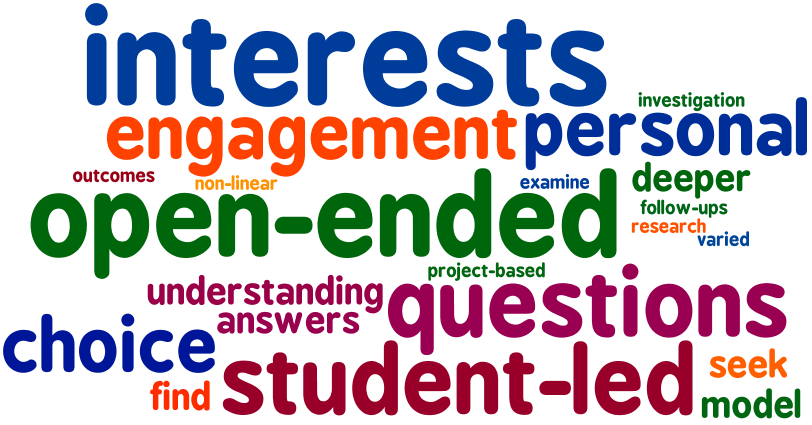 Image 1.1. Inquiry inspired word wall. MissE. 2018. Created with Wordle [Click to enlarge]
When I think about inquiry learning, I think of a journey to a final destination of discovered knowledge and shared ideas. Whilst you must complete certain steps along the way, the experience is always different, and never straightforward. A bit like taking a flight.
Aircraft line the terminal building, ready to depart to a foreign destination. Passengers board, carrying baggage and a basic knowledge of on-board procedures, whilst the crew complete essential pre-flight checklists. After deciphering the complex airport instructions and taxiing the aircraft safely through the tarmac mazes, passengers are positioned to take-off on a flight of new discoveries. At cruising altitude, turbulence and diversions are expertly navigated by the captain with guidance from ground control. Passengers sit back and enjoy the in-flight entertainment before eventually being instructed to prepare for the final approach. Reflecting on their safe landing, passengers disembark, their journey complete, and are left to answer one question: ‘Anything to Declare?’
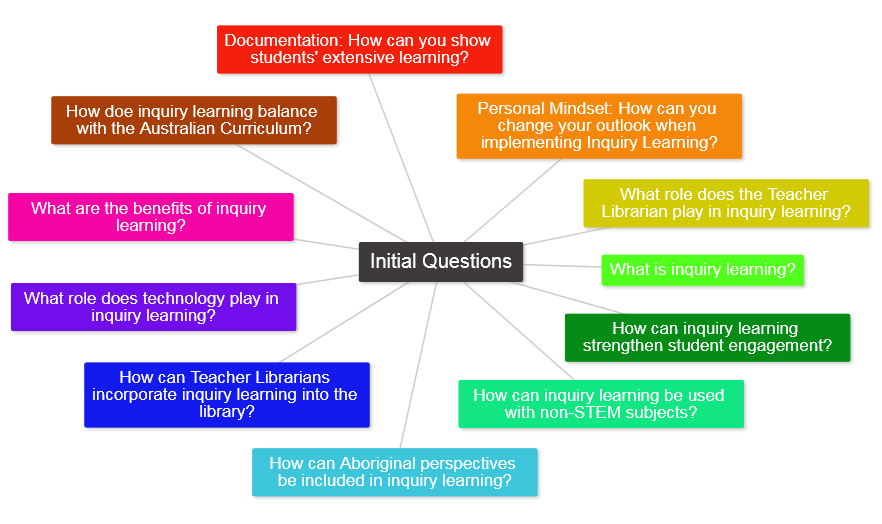 Image 1.2. Initial questions mind map. MissE. 2018. Created with Text2MindMap [Click to enlarge]
Sometimes I feel like one of my pre-schoolers – I need to know everything about everything. Returning to a primary school classroom as a teacher-librarian after my break in early childhood, I am instead bombarded by the ‘why’s and ‘how’s – how do you implement inquiry learning, how can I do it in my classroom, why should I use it, how it will help my students? And so, my questions are born – I want to know just how inquiry learning can help my students, what issues might occur that I need to be aware of, and how my new role as a teacher-librarian will come into play.
How does inquiry learning strengthen and change a primary school student’s engagement with a learning topic?
What are the possible challenges encountered by stakeholders when implementing inquiry learning in the primary school classroom?
What role does the teacher librarian play in promoting and supporting inquiry learning in the primary school environment?